
I have been contacted by Bath resident Rod Sweet who tells me he is a keen walker, a history buff, and a journalist with 30 years experience.
He has edited the online magazine Global Construction Review since 2013, and is nearing completion of a unique book that guides you on an approximately eight-mile walk in and around Bath, using its 2,000-year built history to trace its evolution from a steaming bog to today.
“I’ve never had this much fun with a writing project,” Rod told me. “We know the main talking points about Bath’s history, but a lot gets ignored or avoided, like the elder John Wood’s bizarre ideas, which drove him creatively, the stunning business instincts of Ralph Allen, and the cunning of Prior William Holloway, who bribed Thomas Cromwell to save his and his monks’ skin ahead of the Dissolution.”
Sweet said he’s aiming to publish in the summer.
He’s kindly sent me a flavour of what you can expect within its pages.
“Brunel was really threading the needle when he brought his Great Western Railway from London into Bath in 1839.
Bath sits in a narrow river valley, leaving few route options, so he had the tracks built between the Kennet & Avon Canal on the right, completed in 1810, and the end of a fancy new street, Hampton Row, completed around 1820.
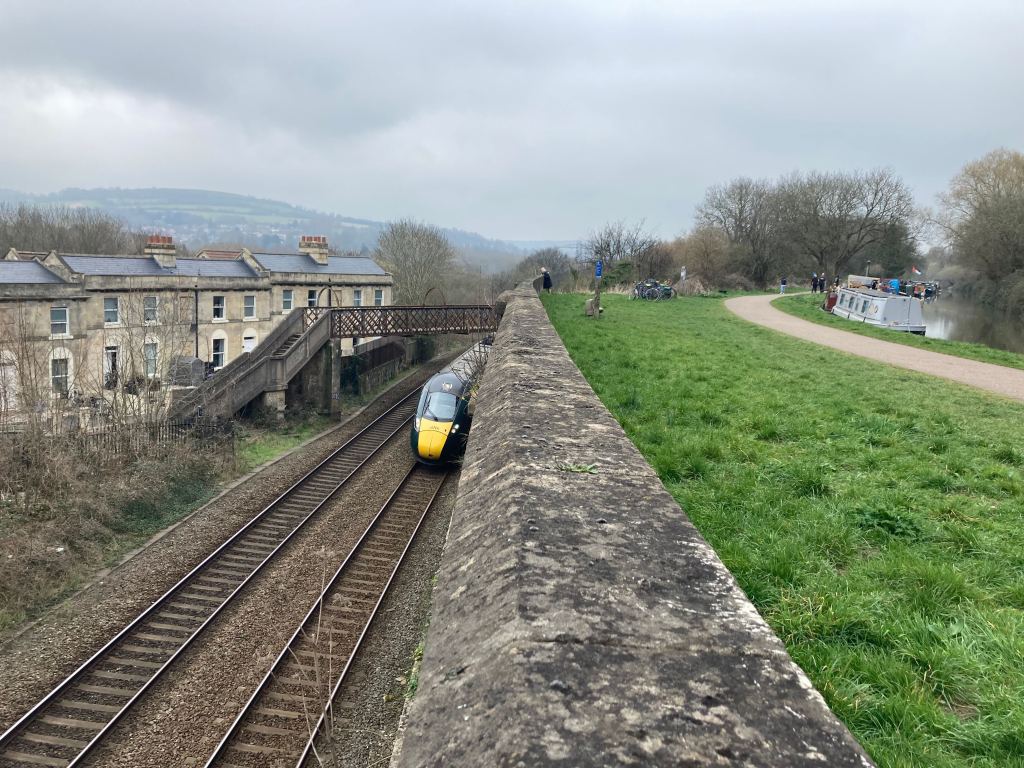
To pull it off, he had his navvies shunt the canal a dozen yards to the east into the side of a steep hill so he could squeeze his railway in between. It required a gigantic retaining wall. The canal company charged the railway £20 an hour for the loss of business. It took 383 hours, racking up £7,660, about £675,000 today.
The navvies lived in big encampments in the fields. Newspapers scared locals with stories of their lawlessness, but townsfolk profited from them when they could.
When the railhead reached Hampton Row, residents took advantage of the Beerhouse Act of 1830, which allowed households to sell beer, and four of the street’s 14 prim houses became pubs overnight.”
Great stuff Rod. Do let me know when you publish!
